

GI Conduit Installation Services
Safe & Reliable Electrical Conduit Solutions
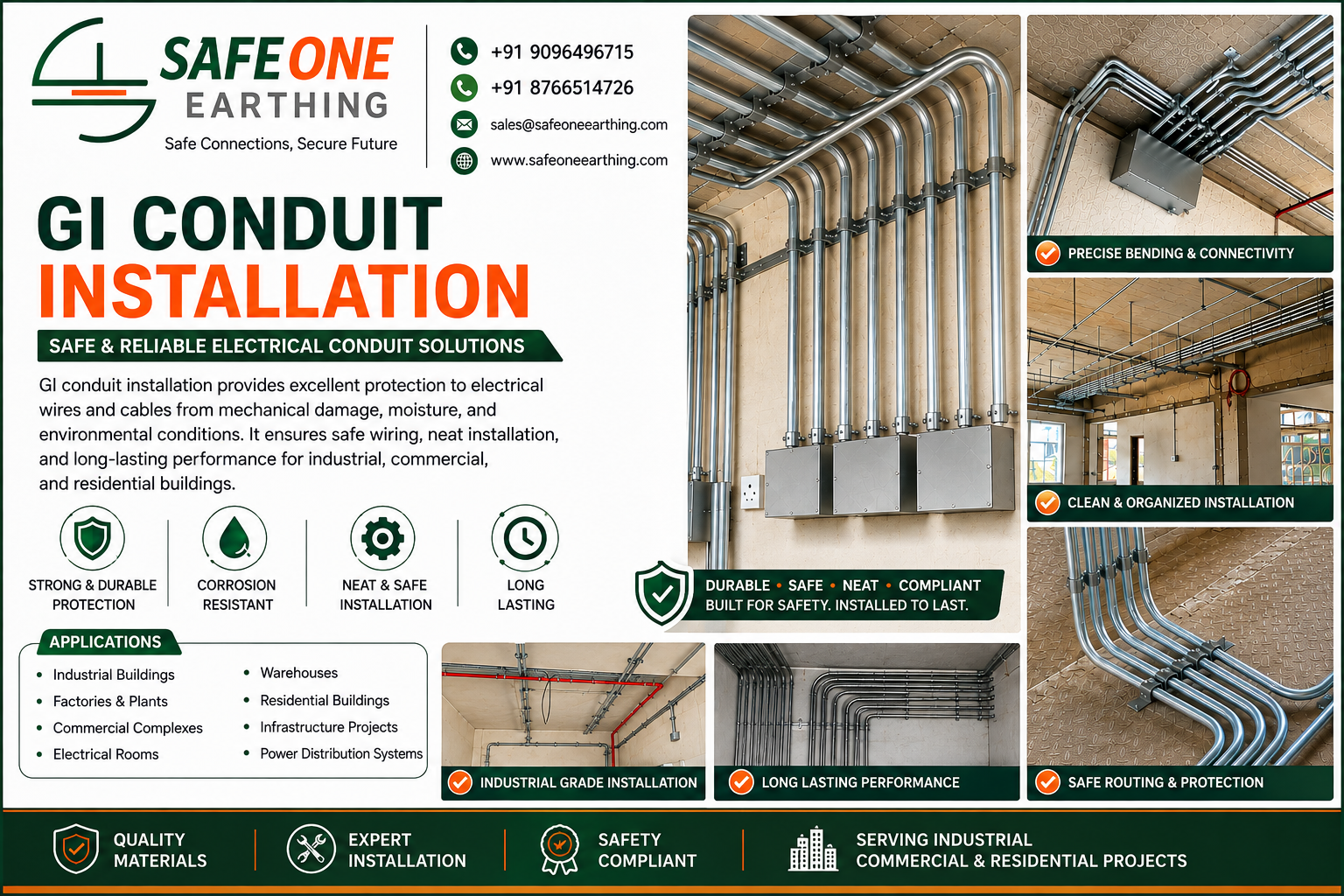
GI conduit installation is an effective method of protecting electrical wires and cables from mechanical damage, moisture, dust and environmental conditions. Galvanized Iron (GI) conduits provide a strong, organized and durable pathway for electrical wiring.
Safeone Earthing LLP provides professional GI conduit installation services for industrial, commercial and residential electrical projects. Our installation approach focuses on safe cable routing, proper mechanical support, neat workmanship and long-lasting performance.
Table of Contents
- What is GI Conduit Installation?
- Why is GI Conduit Used for Electrical Wiring?
- Benefits of GI Conduit Installation
- Types of GI Conduit Installation
- GI Conduit Installation Process
- Materials Used for GI Conduit Installation
- Applications of GI Conduit
- Industrial GI Conduit Installation
- Commercial GI Conduit Installation
- GI Conduit Installation Safety
- Maintenance and Inspection
- GI Conduit Installation by Safeone Earthing
- Frequently Asked Questions
What is GI Conduit Installation?
GI conduit installation is the process of installing Galvanized Iron conduit pipes to protect and route electrical wires and cables. The conduit creates a physical barrier around electrical wiring and helps provide a neat and organized electrical installation.
GI conduits are commonly used where electrical cables require additional mechanical protection. They are suitable for a wide range of applications, including factories, manufacturing plants, warehouses, commercial buildings, electrical rooms and infrastructure projects.
Why is GI Conduit Used for Electrical Wiring?
Electrical cables can be exposed to mechanical impact, dust, moisture and other environmental conditions. A properly installed GI conduit provides a strong pathway for routing and protecting these cables.
A well-designed conduit system also helps maintain organized cable routes and makes inspection and maintenance easier.
- Protects electrical wires from mechanical damage.
- Provides organized cable routing.
- Offers durable physical protection.
- Helps maintain a neat electrical installation.
- Facilitates inspection and maintenance.
- Suitable for many industrial and commercial applications.
Benefits of GI Conduit Installation
1. Strong Mechanical Protection
GI conduit provides a rigid protective pathway around electrical wires, helping reduce the risk of physical damage.
2. Corrosion Resistance
The galvanized coating provides protection against corrosion and makes GI conduit suitable for many electrical installation environments.
3. Neat and Organized Wiring
Proper conduit routing creates clean and organized cable pathways, improving the overall appearance and accessibility of the installation.
4. Long-Lasting Performance
Correctly selected and professionally installed GI conduit can provide durable protection for electrical wiring.
5. Easy Maintenance
Organized conduit routes make electrical wiring easier to inspect, maintain and modify when required.
Types of GI Conduit Installation
GI conduit can be installed using different arrangements depending on the building structure, electrical design and project requirements.
- Surface-mounted GI conduit installation
- Wall-mounted GI conduit installation
- Ceiling-mounted GI conduit installation
- Industrial GI conduit installation
- Electrical room conduit installation
- Equipment connection conduit installation
- Cable routing through GI conduit
- Conduit installation for infrastructure projects
GI Conduit Installation Process
A professional GI conduit pipe installation normally involves several stages to achieve a safe and organized electrical installation.
| Step | Installation Stage | Description |
|---|---|---|
| 1 | Site Survey | Inspect the site and determine cable routes, equipment locations and conduit pathways. |
| 2 | Route Planning | Plan conduit routes according to electrical drawings and project requirements. |
| 3 | Material Selection | Select suitable GI conduits, bends, couplers, clamps, boxes and accessories. |
| 4 | Cutting & Bending | Cut and bend conduit sections according to the planned route. |
| 5 | Fixing & Supporting | Secure the conduit using suitable clamps, saddles and supports. |
| 6 | Jointing | Connect conduit sections using appropriate couplers and accessories. |
| 7 | Cable Installation | Route electrical wires or cables through the completed conduit pathway. |
| 8 | Inspection | Check conduit routing, supports, joints and overall installation quality. |
Materials Used for GI Conduit Installation
Depending on the project design, a GI conduit installation may include the following materials and accessories:
- GI conduit pipes
- GI conduit bends
- Conduit couplers
- Junction boxes
- Inspection boxes
- Conduit saddles
- GI clamps
- Locknuts
- Conduit bushes
- Cable glands
- Flexible conduit connections
- Earthing and bonding accessories where required
Applications of GI Conduit Installation
GI conduit systems are used across various electrical and construction projects where protected and organized cable routing is required.
Industrial Projects
- Factories
- Manufacturing plants
- Production facilities
- Industrial buildings
- Process areas
Commercial Projects
- Commercial buildings
- Offices
- Warehouses
- Hotels
- Shopping complexes
Infrastructure Projects
- Electrical rooms
- Power distribution systems
- Utility buildings
- Infrastructure facilities
Industrial GI Conduit Installation
Industrial GI conduit installation requires careful planning and accurate routing because industrial environments can expose electrical systems to mechanical impact, dust, moisture, vibration and other operating conditions.
Professional conduit installation helps protect electrical wiring while maintaining organized cable routes throughout factories, manufacturing plants, production areas and electrical rooms.
Commercial GI Conduit Installation
Commercial buildings require electrical systems that are safe, organized and easy to maintain. Commercial GI conduit installation provides a structured pathway for electrical wires and cables while improving the overall appearance of the electrical installation.
GI conduit can be used in offices, warehouses, commercial complexes, hotels, hospitals and other commercial facilities according to the project design.
GI Conduit Installation Safety
Electrical conduit installation should be carried out by trained professionals following the applicable electrical design, installation requirements and safety practices.
- Use correctly specified conduit and accessories.
- Provide adequate mechanical support.
- Maintain suitable cable routing and bending requirements.
- Protect cables from sharp edges.
- Ensure appropriate earthing and bonding where required.
- Inspect conduit joints and connections.
- Follow applicable electrical safety requirements.
GI Conduit Maintenance and Inspection
Periodic inspection helps identify potential problems before they affect the electrical installation.
During inspection, check for:
- Loose clamps or supports
- Damaged conduit sections
- Corrosion
- Improper joints
- Damaged cables
- Moisture or water entry
- Unsupported conduit sections
GI Conduit Installation by Safeone Earthing
Safeone Earthing LLP provides professional GI conduit installation services for industrial, commercial and residential electrical projects.
Our focus is on proper conduit routing, secure fixing, neat workmanship, electrical cable protection and reliable installation practices.
Our GI Conduit Installation Services Include:
- GI conduit pipe installation
- Industrial GI conduit installation
- Commercial GI conduit installation
- Electrical room conduit installation
- GI conduit cable routing
- Conduit bending and installation
- Conduit support and fixing
- Electrical wiring protection solutions
Looking for professional GI conduit installation services?
Get a QuoteFrequently Asked Questions About GI Conduit Installation
What is GI conduit installation?
GI conduit installation is the process of installing galvanized iron conduit pipes to protect and route electrical wires and cables.
What are the benefits of GI conduit?
GI conduit provides strong mechanical protection, organized cable routing, durability and corrosion resistance suitable for many electrical installations.
Where is GI conduit installation used?
GI conduit is commonly used in factories, industrial buildings, warehouses, commercial buildings, electrical rooms, infrastructure projects and other electrical installations.
Is GI conduit suitable for industrial projects?
Yes. GI conduit is commonly used for industrial electrical cable protection where a strong and durable conduit system is required.
Can GI conduit be installed on walls and ceilings?
Yes. Depending on the project design, GI conduit can be surface mounted on walls, ceilings and other suitable structures using appropriate supports and fixing accessories.
Why choose professional GI conduit installation?
Professional installation helps ensure accurate conduit routing, proper bending, secure fixing, suitable accessories and neat electrical cable management.