

 >
>
A lightning arrester, also commonly called a surge arrester, is a protective electrical device used to limit transient overvoltage and divert surge current away from electrical equipment.
Lightning and switching events can produce high-voltage transients that may damage electrical equipment, insulation, transformers, control panels and other connected systems. A properly selected and installed surge protection device provides a controlled discharge path for these transient currents.
Lightning protection arrangements are commonly used in residential buildings, commercial buildings, factories, electrical substations, transformers, telecommunication installations, solar power systems and industrial facilities.
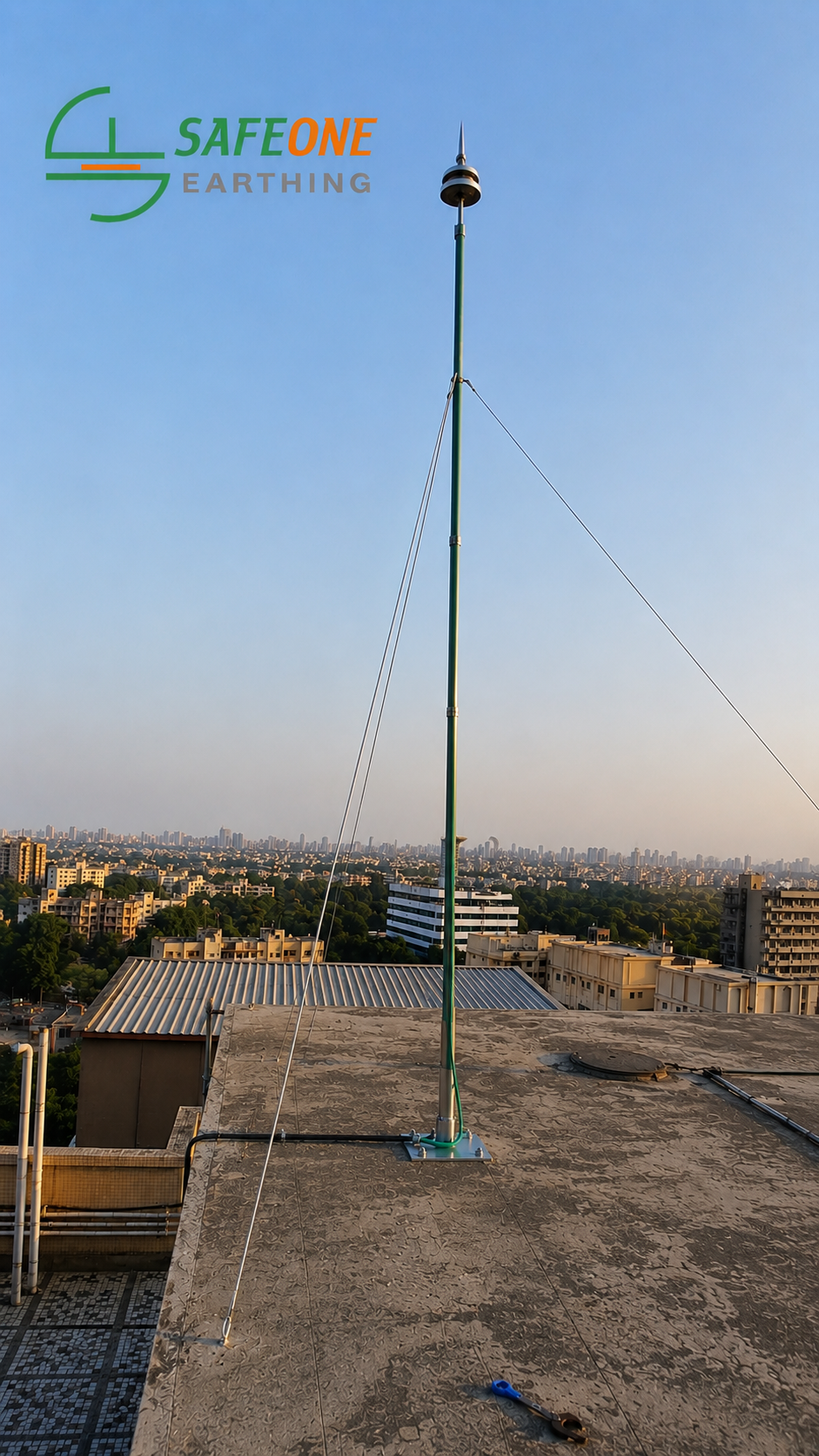
A lightning arrester, also referred to as a lightning protection air terminal or air termination system, is a protective component designed to intercept a direct lightning strike and provide a controlled path for the lightning current to safely discharge into the earth. It is generally installed at the highest and most exposed points of a building or structure and is electrically connected to the earthing system through a suitable down conductor.
Lightning protection systems are used to protect residential buildings, commercial buildings, industrial facilities, schools, offices, warehouses, towers and other structures against the damaging effects of direct lightning strikes. During a thunderstorm, electrical charges build up within clouds and between the cloud and the earth. When the electrical potential becomes sufficiently high, a lightning discharge can occur between the cloud and ground.
A lightning discharge involves a very high magnitude of electrical current flowing through a highly conductive plasma channel. The lightning current seeks a low-impedance path between the discharge point and earth. Tall buildings, towers, isolated structures, trees and other elevated objects are more likely to become points of attachment for a lightning strike. Without a properly designed lightning protection system, the resulting current can cause structural damage, fire, electrical equipment failure and dangerous potential differences within the installation.
The primary function of a lightning protection system is to provide a defined and low-impedance path for the lightning current. When a lightning strike is intercepted by the air termination system, the current is conducted through the down conductor system and safely dissipated into the earth through the lightning protection earthing system. The system is designed to control the current path and reduce the risk of uncontrolled current flow through the building structure, electrical installations and other conductive services.
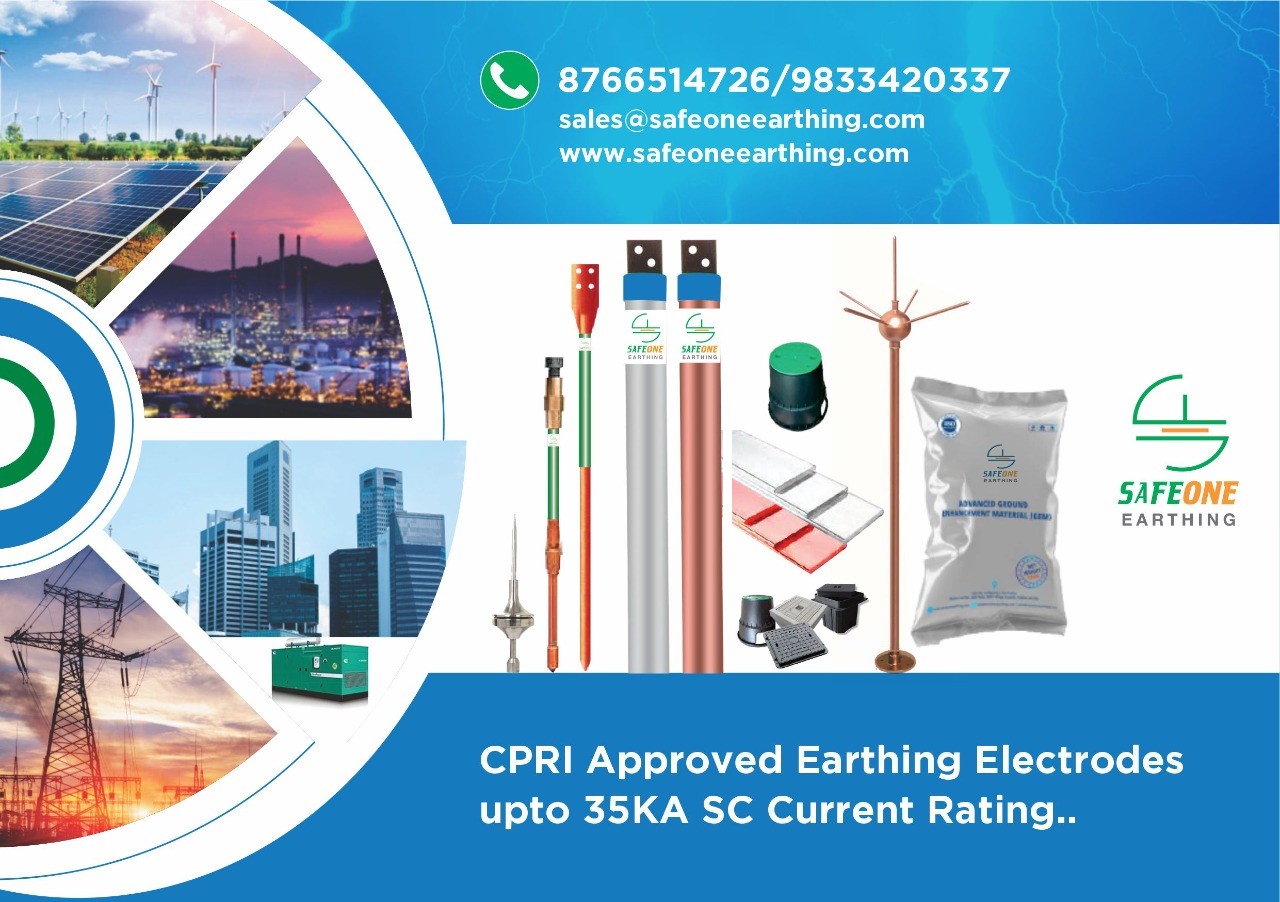
A complete lightning protection system normally consists of air termination conductors or lightning air terminals, down conductors, test joints, earth electrodes, earth conductors and bonding connections. The design and installation should provide appropriate separation, mechanical protection and electrical continuity throughout the complete lightning current path.
Proper earthing is an essential part of lightning protection. The down conductor must be connected to a suitable earth termination system capable of safely dispersing the lightning current into the surrounding soil. The earthing arrangement should be designed considering soil resistivity, electrode configuration, conductor size, number and location of earth electrodes, and the characteristics of the protected structure.
Lightning protection should not be considered only as the installation of a metal rod on the roof. Effective protection requires coordination between the air termination system, down conductors, earth termination system, bonding and protection against transient overvoltages. Surge Protective Devices (SPDs) may also be used on electrical and electronic systems to reduce the effects of lightning-induced transient voltages and surge currents.
A properly designed and installed lightning protection system helps provide a controlled discharge path for lightning current and significantly reduces the risk of structural damage, fire, equipment damage and dangerous electrical potential differences during lightning events.
The basic purpose of a lightning arrester is to limit excessive transient voltage and help prevent damaging surge energy from reaching protected electrical equipment.
During normal voltage conditions, the arrester remains in a high-resistance state. When lightning or switching activity produces a sufficiently high transient voltage, the device becomes conductive and diverts surge current through the protective discharge path.
After the transient event has passed, the arrester returns to its normal operating condition.
Different surge arresters are used according to system voltage, electrical configuration, installation environment and protection requirements.
Metal oxide surge arresters, particularly zinc-oxide-based devices, are widely used in modern electrical protection systems. Their nonlinear voltage-current characteristics allow them to conduct surge current during transient conditions while maintaining relatively high resistance during normal operation.
Distribution-class arresters are used in electrical distribution systems to help protect equipment and networks from transient overvoltages.
Station-class arresters are used for higher-level electrical installations such as substations and other high-voltage applications.
Low-voltage surge protective devices are commonly installed in electrical panels and distribution systems to reduce transient overvoltage reaching connected equipment.
A complete lightning protection arrangement may include several interconnected components. The exact design depends on the building, electrical installation, risk assessment and applicable requirements.
Correct installation is important for effective surge protection. The device should be installed according to the manufacturer's instructions, electrical system characteristics and applicable technical requirements.
Lightning arresters and surge protection devices may be used in many electrical and industrial applications, including:
Selection should be based on the electrical system characteristics, equipment requirements, expected surge conditions, manufacturer specifications and applicable technical requirements.
Periodic inspection and testing can help identify damaged components, deteriorated connections and other issues within a lightning and surge protection installation.
Testing procedures should be selected according to the arrester type, manufacturer's instructions, system voltage and applicable technical requirements.
A lightning arrester and a lightning conductor have different functions within a lightning protection arrangement.
| Lightning Arrester | Lightning Conductor |
|---|---|
| Helps protect electrical equipment from transient overvoltage. | Provides a conductive path for lightning current as part of an external lightning protection system. |
| Used primarily for electrical system and equipment protection. | Used as part of the building's external lightning protection arrangement. |
| Diverts surge current through a protective discharge path. | Conducts lightning current through the down-conductor system. |
| Commonly installed near electrical equipment or distribution points. | Installed as part of the external lightning protection system. |
A lightning arrester is a protective electrical device designed to limit transient overvoltage and divert surge current away from protected electrical equipment.
Its main purpose is to help protect electrical equipment and insulation from damaging transient voltage caused by lightning and other switching events.
During normal operation, the arrester presents high resistance. During a sufficiently high transient voltage, it becomes conductive and provides a path for surge current through the protective discharge system.
Lightning arresters may be installed at suitable points in electrical distribution systems, substations, transformers, panels and other installations requiring surge protection.
Common categories include metal oxide surge arresters, distribution-class arresters, station-class arresters and low-voltage surge protection devices. The appropriate device depends on the electrical system and protection requirements.
No. A lightning arrester primarily provides protection against transient overvoltage in an electrical system, while a lightning conductor forms part of an external lightning protection system.
The protective discharge path requires an appropriate earthing and bonding arrangement so that surge current can be diverted safely. The earthing system should be designed and installed according to the requirements of the electrical installation.
A lightning arrester is primarily intended to limit electrical-system overvoltage and divert surge currents. Protection against direct lightning strikes to a building requires an appropriately designed external lightning protection system.
Lightning arresters are commonly used in residential and commercial buildings, factories, substations, transformers, solar installations, telecommunication systems, generators and industrial electrical installations.
Periodic inspection and testing can help identify physical damage, deteriorated connections and other problems. Maintenance should follow the manufacturer's recommendations and applicable installation requirements.
Selection depends on factors such as system voltage, electrical configuration, expected surge conditions, equipment requirements, discharge characteristics and manufacturer specifications.
Suitable surge arresters are commonly used to provide overvoltage protection for transformers. The arrester rating and installation arrangement should be selected according to the transformer and electrical system characteristics.
A lightning arrester is an important protective device used to limit transient overvoltage and divert surge current away from electrical equipment.
Effective protection depends on appropriate device selection, installation, earthing, bonding, conductor routing and maintenance.
A complete lightning protection arrangement may also include air terminals, down conductors, earthing electrodes, bonding and surge protection devices. The equipment should be selected and installed according to the electrical system characteristics, manufacturer specifications and applicable technical requirements.
Safeone Earthing provides lightning arrester supply and installation, lightning protection solutions, earthing system installation, earthing system design, earth pit testing and related electrical services for residential, commercial and industrial applications.