Chemical Earthing Materials – Complete Guide
Chemical earthing materials are essential components used to create a reliable and efficient electrical earthing system. A chemical earthing system uses an earthing electrode together with suitable conductive or earth-enhancement material around the electrode to improve the connection between the electrode and surrounding soil.
The selection of suitable chemical earthing material depends on soil resistivity, required earth resistance, electrode design, environmental conditions, corrosion considerations and the requirements of the electrical installation.
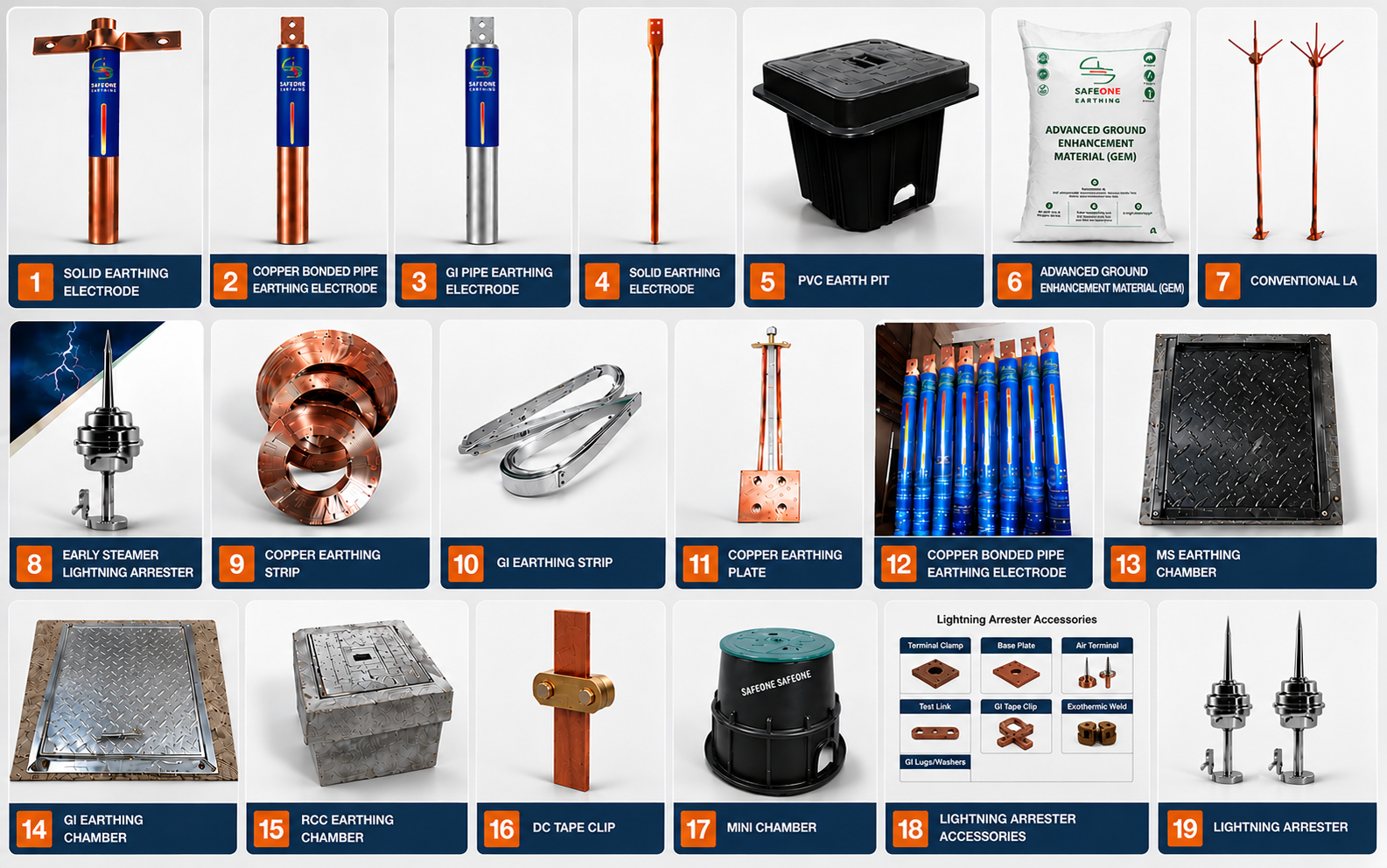
Common chemical earthing materials include earthing electrodes, conductive compounds, earth enhancement materials, bentonite, GI earthing strips, copper strips, GI wires, copper wires, earthing clamps, connectors and inspection chambers.
- Introduction to Chemical Earthing Materials
- What Are Chemical Earthing Materials?
- Main Chemical Earthing Materials
- Chemical Earthing Electrode
- Chemical Earthing Compound
- Bentonite for Earthing
- Conductive Earth Enhancement Material
- GI Earthing Strip
- Copper Earthing Strip
- GI Earthing Wire
- Copper Earthing Wire
- Earthing Clamps and Connectors
- Earth Pit Inspection Chamber
- How to Select Chemical Earthing Materials
- Applications of Chemical Earthing Materials
- Advantages of Chemical Earthing Materials
- Chemical Earthing System Maintenance
- Frequently Asked Questions
- Conclusion
What Are Chemical Earthing Materials?
Chemical earthing materials are conductive and earth-enhancement materials used with an earthing electrode to help establish a reliable electrical connection with the surrounding soil.
These materials are particularly useful in earthing systems where soil conditions, moisture levels and soil resistivity need to be considered during the design and installation process.
Main Chemical Earthing Materials
A typical chemical earthing system can include several components. The following table provides an overview of commonly used materials.
| Material | Purpose / Application |
|---|---|
| Chemical Earthing Electrode | Provides the conductive connection between the earthing system and soil. |
| Earthing Compound | Used around the electrode to improve the electrode-to-soil connection. |
| Bentonite | Can be used as an earth-enhancement material around suitable electrodes. |
| GI Earthing Strip | Connects the electrode to electrical equipment and earthing networks. |
| Copper Earthing Strip | Used where copper conductors are specified for grounding applications. |
| GI Earthing Wire | Used for equipment earthing and bonding. |
| Copper Earthing Wire | Used for electrical bonding and grounding applications. |
| Earthing Clamps | Provide mechanical and electrical connections. |
| Inspection Chamber | Provides access for inspection, maintenance and testing. |
Chemical Earthing Electrode
The chemical earthing electrode is the main conductive component installed in the ground. It provides the connection between the earthing conductor and the surrounding earth.
Electrode selection depends on the earthing design, soil resistivity, installation depth, required earth resistance and environmental conditions.
Common Earthing Electrode Materials
- GI earthing electrodes
- Copper earthing electrodes
- GI pipe electrodes
- Copper pipe electrodes
- Maintenance-free earthing electrodes
- Chemical earthing electrodes
Chemical Earthing Compound
Chemical earthing compound or earth-enhancement compound is placed around the earthing electrode to improve the contact between the electrode and surrounding soil.
A suitable conductive compound can help maintain a more consistent electrode-to-earth connection when correctly selected and installed.
Bentonite for Earthing
Bentonite is an earth-enhancement material that can be used around suitable earthing electrodes. Its moisture-retaining properties can help maintain contact between the electrode and surrounding soil.
Bentonite should be selected and installed according to the earthing system design and the product manufacturer's recommendations.
Conductive Earth Enhancement Material
Conductive earth-enhancement materials are used around earthing electrodes to improve the electrical contact between the electrode and soil.
Different products may use different formulations. Therefore, the technical specifications, installation instructions and suitability for the soil conditions should be checked before use.
GI Earthing Strip
GI earthing strip is commonly used to connect an earthing electrode to electrical panels, equipment, structures and other metallic components.
GI strips are available in different dimensions and thicknesses. The appropriate size should be selected according to the electrical design and project requirements.
Common GI Earthing Strip Sizes
- 25 × 3 mm GI Earthing Strip
- 25 × 6 mm GI Earthing Strip
- 32 × 6 mm GI Earthing Strip
- 40 × 6 mm GI Earthing Strip
- 50 × 6 mm GI Earthing Strip
- 50 × 10 mm GI Earthing Strip
- 50 × 12 mm GI Earthing Strip
- 75 × 6 mm GI Earthing Strip
- 75 × 10 mm GI Earthing Strip
Copper Earthing Strip
Copper earthing strip provides high electrical conductivity and is used in electrical grounding and bonding applications where copper conductors are specified.
Copper strips can be connected to earthing electrodes, electrical equipment and grounding networks using appropriate connectors or clamps.
GI Earthing Wire
GI earthing wire is used for equipment earthing, bonding and connections within an electrical earthing system. The appropriate conductor size should be selected according to the electrical design and applicable requirements.
Copper Earthing Wire
Copper earthing wire offers high electrical conductivity and is commonly used for equipment grounding, bonding and lightning protection applications.
Earthing Clamps and Connectors
Earthing clamps and connectors are used to create secure mechanical and electrical connections between earthing conductors, electrodes, equipment and metallic structures.
Proper connections are important for maintaining continuity throughout the earthing system.
Earth Pit Inspection Chamber
An earth pit inspection chamber provides access to the electrode and connection point for inspection, maintenance and earth resistance testing.
The chamber also helps protect the earthing connection from physical damage and makes periodic inspection easier.
How to Select Chemical Earthing Materials
Selecting the correct chemical earthing materials is important for designing a reliable and durable earthing system.
- Check Soil Resistivity: Soil resistivity should be measured before designing the earthing system.
- Select the Correct Electrode: Choose an electrode according to the project requirements and soil conditions.
- Choose Suitable Earth Enhancement Material: Select a suitable conductive or earth-enhancement compound according to the manufacturer's specifications.
- Select the Earthing Conductor: GI or copper conductors may be selected according to the electrical design.
- Consider Corrosion: Material compatibility and environmental conditions should be considered.
- Provide Inspection Access: The earthing system should allow suitable inspection and testing.
Applications of Chemical Earthing Materials
Chemical earthing systems and their materials are used in various electrical and industrial installations, including:
- Residential buildings
- Commercial buildings
- Factories
- Manufacturing plants
- Electrical substations
- Transformer installations
- Data centers
- Telecommunication systems
- Solar power installations
- Generator installations
- Electrical panels
- Industrial equipment
- Lightning protection systems
Advantages of Chemical Earthing Materials
- Can provide a reliable electrode-to-earth connection when properly designed.
- Suitable earth-enhancement materials can improve soil contact around an electrode.
- Can be used in different soil conditions when correctly designed.
- Provides a practical solution for electrical grounding applications.
- Can support long-term earthing system performance when suitable materials are selected.
- Allows integration with GI or copper earthing conductors.
Chemical Earthing System Maintenance
Regular inspection and testing are important for maintaining an effective chemical earthing system.
Earthing connections, electrodes, conductors, clamps and inspection chambers should be checked periodically for corrosion, loose connections, physical damage or deterioration.
Earth resistance should be tested using an appropriate testing method and suitable test equipment according to the requirements of the installation.
Frequently Asked Questions About Chemical Earthing Materials
What are chemical earthing materials?
Chemical earthing materials are conductive and earth-enhancement materials used with an earthing electrode to establish a reliable electrical connection between the electrode and surrounding soil.
What material is used in chemical earthing?
Chemical earthing systems may use an earthing electrode together with suitable earth-enhancement or conductive compounds. Bentonite and other approved conductive materials may be used depending on the system design.
What is chemical earthing compound?
Chemical earthing compound is an earth-enhancement material placed around an earthing electrode to improve the electrode-to-soil connection.
Is bentonite used for chemical earthing?
Bentonite can be used as an earth-enhancement material around suitable earthing electrodes. Its suitability depends on the electrode design, soil conditions and installation requirements.
Which conductor is used for chemical earthing?
GI or copper conductors such as earthing strips and wires may be used depending on the earthing system design and project requirements.
Why is soil resistivity important in chemical earthing?
Soil resistivity affects the electrical resistance between an earthing electrode and the surrounding earth. Measuring soil resistivity helps determine the appropriate earthing design and materials.
Conclusion
Selecting suitable chemical earthing materials is an important part of designing a reliable electrical earthing system. The system may include an earthing electrode, earth-enhancement compound, bentonite, GI or copper conductors, clamps, connectors and an inspection chamber.
The appropriate materials should be selected according to soil resistivity, required earth resistance, electrical design, environmental conditions and manufacturer's technical specifications.
Safeone Earthing provides chemical earthing solutions, earthing material supply, GI earthing strip installation, copper earthing, earth pit testing and earthing system design for residential, commercial and industrial applications.